

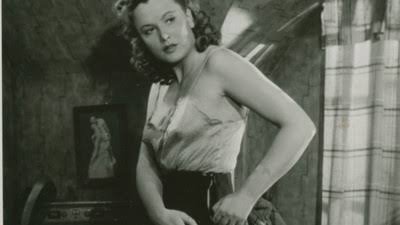
Hilda Borgström is a name that turns up in film history books, genealogy databases, and Swedish theatre records — often with very little context attached. For many people, she is just a name in a search result. But her story is worth knowing.
She was one of Sweden’s most respected actresses of the early twentieth century. She worked across ballet, theatre, and silent film for more than six decades. And according to the Svenskt kvinnobiografiskt lexikon — one of Sweden’s most authoritative biographical sources — she was the first Swedish film star to achieve international fame.
This article covers who she was, where she came from, what made her career remarkable, and what her connection to legendary directors like Victor Sjöström and Ingmar Bergman actually looked like.
Who Was Hilda Borgström?
Her full name was Hilda Teresia Borgström. She was born on 13 October 1871 in Stockholm and died there on 2 January 1953. She spent almost her entire life in the same city where she was born — and built a career there that lasted well past her eightieth year.
She worked in theatre, film, and drama education across different eras of Swedish entertainment. That is a significant span. She was performing on stage before cinema even existed as a medium, and she was still making films when Ingmar Bergman was just beginning his career.
The Svenskt kvinnobiografiskt lexikon describes her specifically as the first Swedish film star to gain international fame. It is worth being precise about that description. The claim is not that she was the first actress to appear in a Swedish film. It is that she was the first to become known internationally through film — a meaningful distinction.
If you have encountered the name Hilda Borgström in a genealogy search or a MyHeritage record, the person most likely being referenced is this Hilda Teresia Borgström, born and died in Stockholm. The surname Borgström is not uncommon in Swedish records, so it is worth checking full names and dates before drawing any conclusions.
From Ballet School to the Royal Dramatic Theatre
Hilda Borgström did not start out as an actress. Her first formal training was in ballet. From 1880 to 1887, she studied at the ballet school attached to the old Royal Theatre in Stockholm. She was still a child when she began, and she spent seven years there before changing direction entirely.
At some point in the late 1880s, she made the shift from dance to drama. It was not an unusual move for the time — many performers crossed between disciplines — but it turned out to be the decision that defined her life.
She made an early stage appearance with the Rydberg theatre company in 1888. Her professional stage debut followed around 1890, at one of Albert Ranft’s theatres. Ranft was a major figure in Swedish commercial theatre at the time, and working in his venues was a credible start for a young actress building her name.
She went on to perform at the Royal Dramatic Theatre — Sweden’s most prestigious stage — during two separate periods: from 1900 to 1912, and again from 1920 to 1938. Those were not brief engagements. That is nearly thirty years of combined work at the country’s leading theatrical institution.
Later in her career, she also taught drama at the Royal Dramatic Theatre’s stage school. That teaching role matters. It means her influence extended beyond her own performances and into the training of the next generation of Swedish actors.
Her Major Silent Films and Work with Victor Sjöström
Hilda Borgström began appearing in films in 1912. By that point, she was already in her forties and had spent more than two decades on stage. The transition to film was a significant one, and she handled it in a way that left a lasting mark on Swedish cinema history.
Her most important early film role came in 1913, when she starred in Ingeborg Holm, directed by Victor Sjöström. The film told the story of a woman driven to mental collapse after being separated from her children by the welfare system. It was an emotionally demanding role, and Borgström carried it. The film was not just a critical success — it reportedly influenced social policy discussions in Sweden at the time.
What made her work in Ingeborg Holm so effective was likely the same thing that made many stage-trained actors well suited to silent film. Without spoken dialogue, the entire performance had to come through the face and body. Years of theatre training had given her exactly that kind of physical expressiveness.
She worked with Sjöström again in 1921, appearing in The Phantom Carriage. That film is one of the most celebrated works in Swedish cinema history. It is studied today for its technical innovation and its haunting storytelling. Borgström played Mrs. Holm, a Salvation Army worker whose life is at the centre of the film’s tragic events. The performance was part of a production that remains influential more than a century later.
These two films — Ingeborg Holm and The Phantom Carriage — are the clearest evidence of why she is remembered in film history, not just theatre history. Both are considered landmarks of early Swedish cinema, and her name is attached to both.
Later Career and Her Connection to Ingmar Bergman
Borgström left the Royal Dramatic Theatre in 1938. According to available sources, she stepped away from the stage because of stage fright. That detail is a little surprising given how long she had performed, but it is what the record indicates. She did not retire entirely, though.
Instead, she returned to film and continued in supporting roles through the 1940s. By this point, she was well into her seventies. Her later film credits show that she remained part of Swedish cinema through its major transition from silent films to sound pictures — and beyond.
Among her later appearances was a role in an early film connected to Ingmar Bergman. Bergman would go on to become one of the most celebrated directors in the history of cinema. The fact that Borgström’s career stretched far enough to overlap with his early work says something about the extraordinary length of her professional life. She had appeared in a Victor Sjöström silent film in 1913, and she was still working with the generation that would shape postwar European film decades later.
Entertainment profiles and industry coverage sometimes highlight this kind of career longevity. Alpha Business Daily covers stories from across business and culture, including the kind of long-arc professional journeys that rarely get enough attention.
Family Background and Private Life
Hilda Borgström never married, according to the Svenskt kvinnobiografiskt lexikon. She did have a daughter, though the biographical record does not go into further detail about that relationship.
Her mother was Ulrika Theresia Borgström, who worked as a seamstress. The biographical entry also lists several brothers. Her father’s identity is listed as unavailable in the primary source, so nothing should be assumed or invented there.
The same source identifies a Gertrud Albertina “Stina” Borgström as her foster daughter. It is important to note that Stina Borgström was her foster daughter, not her biological child. That distinction matters, particularly for anyone researching family connections through genealogy records.
Beyond those facts, her private life is not well documented. The Svenskt kvinnobiografiskt lexikon specifically notes that she kept her personal life private. That appears to have been a deliberate choice, and the historical record reflects it. Her professional legacy is well documented. Her personal circumstances, beyond the basic family details above, are largely her own.
Why Hilda Borgström Still Matters
Hilda Borgström is not a household name today, even in Sweden. But her historical importance is real and specific. She was a bridge between Swedish theatre and Swedish cinema at a time when both were developing their identities. She worked with directors who are still studied and respected internationally. And she taught generations of theatre students at one of the most important dramatic institutions in the country.
Her career ran from ballet training in the 1880s through film roles in the 1940s. That is an extraordinary arc. Most performers find their moment in one era. She worked across several.
If you encountered her name in a genealogy search, a film history reference, or an archived theatre programme, the information above should help you understand who she actually was. The record on her professional life is solid. The record on her personal life is intentionally thin — and that choice deserves to be respected even now.
She was, by any reasonable measure, one of the most significant figures in the early history of Swedish entertainment. That is worth knowing.
Read Also:
