

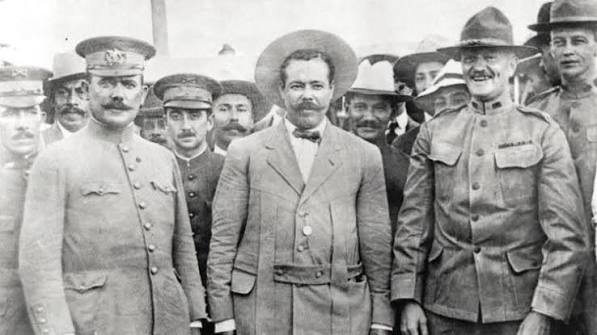
Pancho Villa is one of the most documented figures of the Mexican Revolution. Historians, journalists, and filmmakers have traced his life in detail. Yet many people connected to him by blood remain largely unknown to the public. Octavio Villa Coss is one of them.
His name appears in online genealogy profiles and a handful of secondary sources, mostly because of his reported link to Villa. But confirmed, independently verified information about him is scarce. This article covers what available records say, where those records come from, and what should be treated with caution.
Who Octavio Villa Coss Was
According to genealogy profiles, Octavio Villa Coss was born on May 16, 1914, at Rancho de Santiago in the state of Chihuahua, Mexico. The same records list his death as April 16, 1960, in Mexico City, with burial reportedly in Hermosillo, Sonora.
These details come primarily from user-contributed profiles on platforms like Geni, not from official government archives or academic historical records. That distinction matters. A genealogy platform profile is a useful starting point for research, but it is not the same as a verified birth certificate or a peer-reviewed biography.
Octavio Villa Coss was not a widely documented public figure on his own. Most of the interest in him comes from his reported connection to a much more famous name.
His Reported Connection to Pancho Villa
The main reason people search for Octavio Villa Coss is his alleged relationship to Pancho Villa, the Mexican revolutionary leader born José Doroteo Arango Arámbula. Geni’s profile lists Octavio as a son of Pancho Villa, while other sources use the more careful phrasing “alleged son.” That second framing is the more appropriate one here.
Pancho Villa had a large and complicated family network. Historical records and biographical accounts describe multiple relationships and a number of reported children across different regions of northern Mexico. That complexity makes it genuinely difficult to verify individual parentage claims without strong primary sources — things like birth records, legal documents, or contemporary newspaper accounts.
The presence of a name in an online family tree does not confirm a biological relationship. It is a research lead, not a conclusion. For Octavio Villa Coss specifically, the available evidence comes from genealogical profiles rather than from primary historical documents.
It is also worth noting a small but meaningful detail. A 2013 secondary source refers to “Juan Octavio Villa Coss” as Pancho Villa’s son — not simply “Octavio Villa Coss.” That slight name variation may refer to the same person, or it may not. Without a source that explicitly confirms they are the same individual, it would be a mistake to treat the two names as interchangeable.
His Reported Mother and the Name Variation Problem
Genealogy records identify Octavio’s mother as Guadalupe Coss, though the name appears with different spellings depending on the source. Some records show “Guadalupe Coss,” others show “Guadalupe Cos,” and at least one variant reads “Guadalupe Cos Dominguez.”
These variations likely refer to the same woman, but the inconsistency is worth acknowledging rather than glossing over. User-submitted genealogical data often contains spelling differences that reflect transcription errors, regional spelling habits, or simply different contributors entering information separately.
Treating each spelling as a confirmed separate identity would be a mistake. At the same time, picking one spelling as definitive without documentary evidence would also overstate what the record actually shows. The honest answer is that the name variations exist, and resolving them would require access to original civil records or other primary documents.
Pancho Villa’s known and alleged relationships with multiple women during the revolutionary period add another layer of complexity to any descendant research. That historical context helps explain why records involving his reported children can be inconsistent and difficult to untangle.
What Accounts Say About His Occupation and Death
Some accounts describe Octavio Villa Coss as having held a military or law enforcement role — the descriptions include references to lieutenant colonel or police commander. However, the available search results do not provide independently verified documentation of his exact rank, office, or service record. These descriptions should be understood as reported claims, not confirmed biography.
His death in 1960 is the detail that draws the most attention in secondary sources. Some accounts connect his killing to Juan Nepomuceno Guerra, an early figure associated with organized smuggling in northern Mexico and widely cited in histories of the Gulf Cartel’s origins. The specific 2013 account that makes this connection refers to “Juan Octavio Villa Coss” and describes him as Pancho Villa’s son.
That secondary source is not a primary historical record. It does not appear to be drawn from official investigative documents or contemporary press coverage from 1960. For that reason, the connection between Octavio Villa Coss’s death and Juan Nepomuceno Guerra should be described as reported or alleged, not as an established historical fact.
The language that fits the evidence best: some accounts link his death to Guerra, and his killing in 1960 is referenced in secondary sources. Beyond that, the record as it currently stands does not support more specific claims.
What Is Known About His Family
The Geni profile for Octavio Villa Coss states that he had at least one daughter with a woman named María de los Ángeles Guerrero González. That is a user-contributed genealogical claim and reflects the information entered into that profile by contributors to the platform.
It would not be accurate to expand that into a larger family portrait without additional documentary support. Claims about a specific number of children, for example, do not appear to have a reliable source in the available material and should not be introduced.
Why His Name Appears in Genealogy Searches
If you have searched for Octavio Villa Coss on platforms like Geni or MyHeritage, you have likely found a profile that lists Pancho Villa as his father. That profile exists because contributors to those platforms built family trees that connect Villa’s reported descendants.
MyHeritage and similar platforms allow users to submit family tree information, photos, and historical records. The platforms organize that information and make it searchable. But the data reflects what members have entered, not what has been independently verified by historians or archivists.
Think of a genealogy profile as an index card pointing toward a possible document. It is a starting point. The actual document — a birth record, a civil registration, a news report from the period — is what turns a reported relationship into a confirmed one.
For anyone researching Pancho Villa’s descendants more seriously, the Geni profile for Octavio Villa Coss also references a 1996 report by journalist Dane Schiller and a 2008 item from the Mexican publication Milenio. Those may be useful leads, but evaluating them would require reading the original publications directly rather than relying on the genealogy profile’s citation.
If you enjoy reading about historical figures and the families connected to them, Alpha Business Daily covers a range of profiles that mix public records with careful sourcing.
Reading This Kind of History with the Right Expectations
Octavio Villa Coss is not a figure with a large public archive behind him. He is someone who appears at the edges of a much larger story — the life and legacy of Pancho Villa — and whose own story is reconstructed mainly from genealogical records rather than from verified historical accounts.
That does not make the question of who he was unimportant. It just means the honest answer involves more uncertainty than a clean biography would suggest.
What the available evidence supports: genealogy profiles place his birth in Chihuahua in 1914, identify him as a reported son of Pancho Villa through a woman named Guadalupe Coss, and record his death in Mexico City in 1960. Secondary accounts connect his death to organized crime figures in northern Mexico, though those accounts rely on sources that are not primary historical records.
What the evidence does not yet support: a confirmed biological relationship with Pancho Villa, a verified military or law enforcement title, a precise account of his death, or a detailed picture of his life. Those gaps are part of the record, and they deserve to be named rather than filled in with assumptions.
For anyone drawn to this topic, the most useful next step would be consulting Mexican civil records from Chihuahua, archival newspaper coverage from the 1960 period, or academic work on Pancho Villa’s family. That is where a clearer picture, if one exists, would most likely emerge.
Read Also:
