

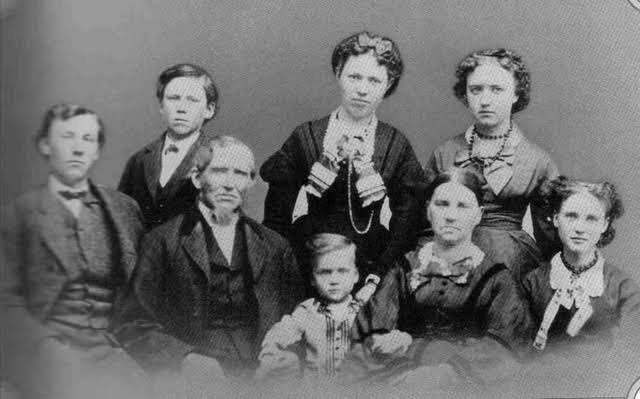
Most readers know the Wilder name through Laura Ingalls Wilder’s beloved books. But Almanzo’s sister, Eliza Jane Wilder, led a full and independent life that stretched well beyond the prairie chapters Laura wrote about. She taught school, filed a homestead claim on her own, worked for the federal government, and eventually settled far from the Dakota plains where her story is best known.
This article covers who Eliza Jane Wilder actually was, how she connects to Laura and Almanzo, what her time in Dakota Territory really looked like, and how to find her accurately in historical records.
Who Eliza Jane Wilder Was
Eliza Jane Wilder was born on January 3, 1850, near Malone, New York. Her birth date and birthplace are confirmed by the Pioneer Girl Project, which draws on archival records rather than literary sources.
She grew up in the Wilder family alongside her brothers Royal and Almanzo. When Almanzo married Laura Ingalls in 1885, Eliza became Laura’s sister-in-law — not her sister. That distinction matters because it often gets confused in online searches and family tree databases.
Her connection to Laura Ingalls Wilder is the main reason readers search for her today. But Eliza had a life and story of her own that deserves a closer look on its own terms.
Her Education and Early Teaching Career
Eliza Jane was formally educated at Franklin Academy in Malone, New York. She qualified as a teacher around age 19, which was a meaningful achievement for a woman of her time.
She went on to teach in New York and Minnesota before eventually heading west. Teaching wasn’t just a job for her — it was her main source of income and a steady part of her adult identity for years.
It’s worth being careful here. The historical record confirms she taught, but it doesn’t paint an entirely glowing picture of her classroom experience. The Pioneer Girl Project notes that Laura described Eliza as educated but not especially well suited to managing discipline or classroom fairness. That account comes filtered through Laura’s personal perspective, so it’s best treated as one view rather than a definitive verdict.
The Move to Dakota Territory and Her Homestead Claim
In 1879, Eliza moved to De Smet in Dakota Territory, joining her brothers Royal and Almanzo. All three pursued homestead claims in the area. It was a common pattern for families to spread out and claim multiple parcels of land.
Eliza filed her own claim and taught school in De Smet to earn a living while working toward the homestead requirements. That created a genuine problem. Homestead law required physical presence on the land and visible improvements. Teaching kept her off her claim for stretches of time.
To address this, she prepared detailed letters and affidavits documenting her absences and explaining how she still met the legal requirements. Those documents survive and are considered historically valuable. They offer a clear, practical look at the difficulties single women faced under homestead law — not a romanticized frontier narrative, but the real logistical tension of holding two responsibilities at once.
The book A Wilder in the West: The Story of Eliza Jane Wilder reportedly includes a reprint of her homestead affidavit, which gives readers direct access to her own words on the subject. Her homestead file is also referenced in a National Archives publication on De Smet’s history, which highlights her correspondence as an unusually detailed record of women’s experiences with land claims.
Eliza Jane in Laura’s Books and the Real Historical Record
Laura Ingalls Wilder included a teacher named Eliza Jane in Little Town on the Prairie. The character is based on real shared history — Eliza Jane did teach in De Smet during the period Laura describes.
But the books present a shaped, literary version of events. Laura wrote from memory, with a specific narrative in mind, and her portrayal of Eliza covers only a narrow slice of Eliza’s life. The books say nothing about her homestead correspondence, her government work, or her later marriages.
The television adaptation of Little House on the Prairie dramatized Eliza Jane further. The TV character should not be used as a biographical reference. It is a creative interpretation, not a documentary record.
If you want an accurate picture of who Eliza Jane Wilder was, census records, homestead files, and archival sources like the Pioneer Girl Project are much more reliable starting points than either the books or the television series.
Government Work, Marriage, and Life After the Prairie
Eliza Jane’s story didn’t end on the Dakota frontier. After her time in De Smet, she eventually moved on to other chapters of her life — some of them quite different from anything Laura wrote about.
Family history material, including a life sketch available through FamilySearch, indicates that Eliza worked for the U.S. Department of the Interior in Washington, D.C. The records describe her as working as a “government girl,” which referred to women in clerical or administrative federal roles. It’s a side of her life that rarely comes up in discussions tied to the Little House legacy.
Around age 42, she married Thomas Jefferson Thayer, a merchant from Spring Valley who had children from a previous marriage. According to the FamilySearch life sketch, they had a son named Walcott Thayer, born in 1894. She later married a man named Maxwell Gordon in 1904, though accounts suggest that marriage eventually ended in separation.
These details come from family history sources rather than directly verified archival records, so they should be treated as solid leads worth confirming rather than established facts. That said, they point to a life that was considerably more varied than what most readers associate with the name Eliza Jane Wilder.
For readers interested in tracing her through genealogy databases, it helps to search under multiple surnames: Wilder, Thayer, and Gordon. Different records may use different names depending on the period and the source.
Her Final Years and Death
Eliza Jane Wilder spent her final years in Louisiana, far from the New York farmland where she was born and the Dakota plains where she homesteaded. She died on June 1, 1930, in Lafayette, Louisiana, after a period of illness that included several strokes.
She was buried in Lafayette’s Protestant Cemetery. The Pioneer Girl Project includes this information as part of its biographical coverage of the Wilder family.
By the time she died, she had lived through multiple eras of American life — from post-Civil War New York to frontier homesteading, federal government work in Washington, D.C., and finally the American South. That range alone makes her a more complex historical figure than her brief appearances in Laura’s books might suggest.
Why Researchers and Readers Search for Her
Eliza Jane Wilder shows up frequently in genealogy searches because of her direct connection to Almanzo and Laura Ingalls Wilder. Anyone building a Wilder family tree will encounter her name. Descendants of the Thayer or Gordon families may also search for her through those married surnames.
Online databases like MyHeritage and FamilySearch contain user-submitted trees that mention her. Those can be useful starting points, but they vary in accuracy. Cross-checking with primary sources — homestead records, census data, death records, and institutional sources like the Pioneer Girl Project or the National Archives — gives a much stronger foundation.
Resources covering business, history, and biography topics, like Alpha Business Daily, often highlight figures like Eliza Jane because her life touches on themes that go beyond celebrity: land ownership, women’s economic independence, government work, and westward migration.
A Life Worth Knowing Beyond the Books
Eliza Jane Wilder was a real woman whose life stretched across regions, careers, and decades. She was Almanzo’s sister and Laura’s sister-in-law — not Laura’s sister, and not simply a character from a children’s book series.
Her homestead letters document genuine historical struggles. Her teaching career predated the frontier years. Her government work in Washington added another dimension entirely. And her later marriages and move to Louisiana show a life that kept moving long after the prairie years ended.
The literary and television versions of Eliza Jane are starting points, not endpoints. For anyone genuinely curious about who she was, the archival record offers a richer, more honest story — and one that holds up on its own, separate from any famous name attached to it.
Read Also:
