

On September 11, 2001, AP photographer Richard Drew captured one of the most haunting images of that day — a man falling from the North Tower of the World Trade Center, his body perfectly vertical against the building’s steel grid. The photograph became known as “The Falling Man.” It was widely published, then widely avoided, then endlessly discussed.
Years later, one name became most closely associated with it: Jonathan Eric Briley.
This article looks at who Jonathan Briley actually was — his career, his faith, his family, and his marriage — and explains why his name is linked to that photograph, while being honest about what is confirmed and what remains unproven.
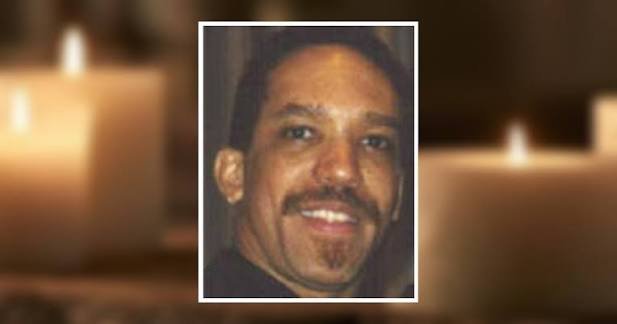
Who Jonathan Briley Was
Jonathan Eric Briley was born on March 5, 1958. He grew up in the Mount Vernon, New York area and built a quiet but meaningful life before his death on September 11, 2001, at age 43.
By profession, he was a sound and audio engineer. His career took him through several well-known hospitality settings, including work at the Hilton, Marriott, and Arrowwood. His most notable position was at Windows on the World, the famous restaurant complex located on the upper floors of the North Tower at the World Trade Center.
His faith was a significant part of his identity. He came from a deeply religious family — his father, Alexander Briley Jr., was a Baptist minister. Jonathan followed that tradition seriously. He served in Christian ministry and music ministry as a young man, and in 2001, he was ordained as a deacon. His church involvement wasn’t just background detail; it was central to how he lived.
On July 23, 1994, Jonathan married Hillary Mattox. According to his Legacy obituary, he was described as both a church musician and a skilled audio professional — someone whose work and worship life overlapped in a meaningful way.
His Brother Alex Briley and the Village People Connection
Many readers first encounter Jonathan’s name through a celebrity connection: his brother.
Jonathan’s brother is Alexander “Alex” Briley, an original member of the Village People, the disco group that became famous in the late 1970s. Alex Briley is best known for portraying the “G.I.” character in the group. The Village People’s music has remained a fixture of pop culture for decades, which means Alex Briley continues to appear in entertainment searches and celebrity profiles.
That connection is why Jonathan’s name sometimes turns up in celebrity searches or genealogy research. But it’s worth being clear: Jonathan had his own distinct career and personal life. He was a sound engineer, a church deacon, and a husband. His story doesn’t begin or end with who his brother was.
The family connection is useful context, but Jonathan deserves to be understood on his own terms.
The “Falling Man” Photograph and Why Briley’s Name Is Linked to It
The photograph taken by Richard Drew on the morning of September 11, 2001, shows an unidentified man falling from the North Tower in a strikingly composed, near-vertical position. The image was printed in newspapers around the world and sparked intense debate about whether it should be published at all.
For years, the identity of the man remained unknown. Several people were considered possible matches. Over time, Jonathan Briley emerged as the most widely reported identification — though it has never been officially confirmed through forensic or government investigation.
The proposed connection rests on a few key details:
- Briley worked at Windows on the World, which occupied floors 106 and 107 of the North Tower — the same area where people were trapped with no way down after the plane struck.
- He was reportedly approximately 6 feet 5 inches tall, which aligns with the physical impression the photograph gives.
- The man in the image appears to be wearing clothing and black high-top footwear that people who knew Briley recognized as consistent with what he typically wore.
These details have been cited in reporting by outlets including UNILAD and in retrospective coverage of the attacks. But it is important to say clearly: this identification has never been officially established. The precise, careful way to put it is that Jonathan Briley is widely believed to be the man in the photograph — not that it has been proven.
No forensic confirmation, no government statement, and no authoritative institution has made a definitive ruling. What exists is a credible, widely accepted identification supported by physical similarities, workplace location, and family testimony.
What His Family Has Said
Perhaps the most significant evidence connecting Jonathan Briley to the photograph comes from his own family — specifically his sister, Gwendolyn Briley-Strand.
Gwendolyn has spoken publicly about the image and about her brother. According to reporting from UNILAD and LBC, the family came to accept that the man in the photograph was likely Jonathan. That acceptance came gradually and was not easy.
Gwendolyn has also shared a detail that adds personal weight to the discussion: she reportedly said that Jonathan had asthma. In her view, the smoke conditions inside the building that morning may have been particularly unbearable for him because of that condition. This is her personal belief and family recollection — it should be understood as such, not as a confirmed medical explanation for what he did or why.
Family testimony is meaningful. It reflects direct knowledge of the person involved and carries real emotional and moral weight. But it is not the same as forensic identification. Gwendolyn’s words matter because they humanize Jonathan and offer insight into who he was — not because they settle a factual dispute that no official process has resolved.
The family’s willingness to speak about this topic over the years has kept Jonathan’s name in public discussion and ensured he is remembered as a person, not just a figure in a photograph.
Why the Identity Remains Unconfirmed
It’s worth taking a moment to understand why the identification was never made official.
The chaos of September 11 meant that thousands of deaths had to be documented under extraordinary pressure and grief. Identifying victims from the towers was often difficult or impossible given the nature of the collapse. In cases involving photographs of people falling from the buildings, there was no clear legal or institutional process to formally establish who was pictured.
The “Falling Man” photograph was also controversial from the moment it appeared. Some families of victims found it disturbing or felt it disrespected the dead. That reaction may have made formal identification efforts more complicated, as institutions and families both navigated deeply sensitive ground.
For readers looking for a definitive answer, the honest response is: the evidence points strongly toward Jonathan Briley, his family believes it was him, and reporters who have investigated the question have come to the same conclusion. But an official confirmation does not exist.
Remembering Jonathan Briley as a Person
It would be easy to reduce Jonathan Briley to a single, terrible moment captured in a photograph. That would be a mistake.
He was a man who spent his career working in sound engineering, helping venues function and events come to life. He worked in respected hospitality settings across the New York area before joining the team at Windows on the World, one of the most iconic restaurant locations in the city.
He was a man of faith who was ordained as a deacon in 2001, the same year he died. His father was a minister. His brother became famous. He became a husband. He was connected to his church and his community.
Coverage of the attacks often focuses on the scale of loss — nearly 3,000 people — in a way that can make it hard to hold individual lives clearly in mind. Jonathan Briley is one of those lives. A sound engineer and church deacon from Mount Vernon, New York, married to Hillary Mattox, son of a Baptist minister, brother of a Village People original.
For anyone interested in learning more about the intersection of personal history, public memory, and the events of September 11, resources like Alpha Business Daily offer a broader range of well-researched content on topics that connect culture, history, and individual stories.
Conclusion
Jonathan Eric Briley was 43 years old when he died on September 11, 2001. He worked at Windows on the World, high above Manhattan, and he never came home.
His name is now most widely known because of a photograph — one of the most discussed and debated images of the 21st century. The identification linking him to that image is widely accepted and supported by physical evidence and family testimony, but it has never been officially confirmed. That distinction matters, and it should be kept in mind whenever his name appears in this context.
What is confirmed is simpler and more important: Jonathan Briley was a real person with a full life, a faith he took seriously, a marriage he chose, and a career he built. He deserves to be remembered that way.
Read Also:
