

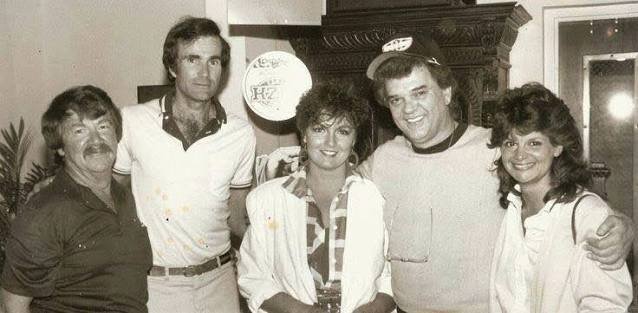
Dolores Virginia Henry is not a household name. But she holds a specific and documented place in the life of one of country music’s most commercially successful artists — Conway Twitty. She was his third and final wife, and her story is best understood through that connection.
This article covers who Henry was, her confirmed marriage to Twitty, the timeline of their relationship, and what secondary sources report about her life before and after his death. Where the evidence is thin, this article will say so clearly rather than fill in the gaps with guesswork.
Who Dolores Virginia Henry Was
Henry was a private individual. She was not a performer, a recording artist, or a public figure in her own right. She became publicly notable because of her marriage to Conway Twitty, and most of what is documented about her exists through that connection.
The available information about her comes from genealogy databases, secondary celebrity profiles, and biographical accounts of Twitty himself. That is a limited pool, but it is not unusual. Non-performing spouses of major public figures often have thin public records, and that does not imply secrecy or controversy — it simply reflects how documentation works for people who live outside the spotlight.
Readers searching for Henry should approach the available sources with realistic expectations. Some details reported about her across various websites lack clear primary documentation. This article will flag those cases rather than repeat them as established facts.
Conway Twitty — The Public Figure She Married
To understand Henry’s story, it helps to know who Conway Twitty was. Twitty was the stage name of Harold Lloyd Jenkins, born in 1933. He started his career in rock and roll before making a full transition to country music, where he became one of the genre’s defining voices.
His country career was built on a long string of number-one hits. He was known for his deep baritone voice and for a style that blended sincerity with commercial appeal. By the time he married Henry, he had been a country music star for nearly two decades.
According to the Encyclopedia of Arkansas, Twitty was married three times in total. His first marriage was to Ellen Matthews. His second was to Temple Maxine Jaco. Dolores Virginia Henry was his third wife. His children — commonly identified in biographical accounts as Jimmy, Kathy, Jony, and Michael — came primarily from his earlier marriages.
The 1987 Marriage and What Led Up to It
Henry and Twitty married on February 27, 1987, according to MyHeritage records. The marriage took place during an active and successful period of Twitty’s country career, when he remained a well-known name in the genre.
Several secondary biographies report that Henry worked as Twitty’s secretary before they married. Wide Open Country is among the sources that carry this detail. It is worth noting, however, that this claim appears in secondary profiles rather than primary documentation. It is plausible, but it should be understood as reported rather than fully confirmed.
Some sources go further and describe Henry’s pre-marriage role in broader terms — as a confidante, an advisor, or even a business partner. Those descriptions stretch beyond what the available evidence clearly supports, so this article does not adopt them. The secretary claim is the most commonly cited and the most cautious way to describe what secondary sources report.
Six Years Together — Their Marriage Until Twitty’s Death
Henry and Twitty were married for approximately six years. During that time, Twitty continued to record and tour. The marriage appears to have been a stable part of his later life, though neither he nor Henry made it a subject of significant public attention.
Conway Twitty died on June 5, 1993. According to EBSCO’s biographical research entry, his cause of death was an abdominal aortic aneurysm. He was 59 years old. IMDb lists Henry as his spouse, with the marriage recorded as ending at his death — a detail consistent with other sources.
No reliable source confirms that Henry and Twitty had biological children together. His children from earlier marriages are documented, but claims about Henry having children with Twitty are not supported by the stronger sources reviewed for this article.
After Conway Twitty Died — Henry’s Name in Family and Estate Context
After Twitty’s death, Henry’s name appeared in accounts connected to his family and estate. Wide Open Country reports a public dispute between Henry and Twitty’s daughter Kathy following the singer’s death. The article mentions the dispute as part of the family dynamic that emerged in the aftermath of his passing.
It is important to be careful here. The available reporting describes a conflict, but this article does not assign fault, describe legal outcomes, or characterize the relationships involved beyond what the source directly states. Disputes involving estates and blended families after the death of a public figure are not uncommon, and the available evidence does not support a fuller account of what happened or how it resolved.
Henry’s name in this context is largely why some readers encounter her through searches connected to Twitty’s legacy. The estate and family discussions kept her name in circulation after 1993 in a way that her marriage alone might not have.
What Secondary Sources Say About Her Later Life and Death
At least one secondary biography reports that Dolores Virginia Henry died on January 21, 2016, and that she was 83 years old at the time. This detail appears in a profile published by BlueLineBiz, which also reports other biographical details about her background and nickname.
However, this death date was not corroborated by the stronger sources reviewed for this article, including the Encyclopedia of Arkansas, EBSCO, or MyHeritage. That does not mean the detail is wrong — it may well be accurate. But because it rests on a secondary source without clear primary documentation, it should be treated as a reported detail rather than a confirmed fact.
The same caution applies to other specific biographical claims about Henry that appear on various websites — including her birthplace, birth date, and the nickname “Dee.” These details may be accurate, but they circulate through secondary profiles that do not always identify their original sources. Readers who need confirmed genealogical information should consult primary records directly.
Reading the Available Evidence Carefully
Henry’s story is a good example of how public information works for private individuals connected to famous people. The confirmed facts are actually fairly clear: she married Conway Twitty on February 27, 1987, she remained his wife until his death on June 5, 1993, and she is documented as his third wife in multiple biographical sources about him.
Beyond that, the picture becomes less reliable. Secondary profiles fill in additional details — her reported occupation before marriage, her possible nickname, a reported death date — but these details travel from site to site without always pointing back to original records. That pattern is worth recognizing whenever you research a private figure connected to a celebrity.
For anyone researching Conway Twitty’s personal life more broadly, resources like Alpha Business Daily can provide a useful starting point for background context on public figures and the people connected to them.
A Final Note on Her Place in Twitty’s Story
Dolores Virginia Henry was Conway Twitty’s partner during the final chapter of his life. She shared six years with one of country music’s most recognized names, and her connection to him is documented well enough to stand as a clear historical fact.
What is harder to establish — and what this article has tried not to overclaim — is the full texture of her life. Who she was before Twitty, what she did after his death, and how she navigated the years that followed are not fully captured in the public record. That is simply the reality of researching someone who chose to live privately.
Her name deserves accurate treatment, not invented biography. The confirmed facts place her clearly in Conway Twitty’s life. That, for now, is what the available evidence reliably supports.
Read Also:
