

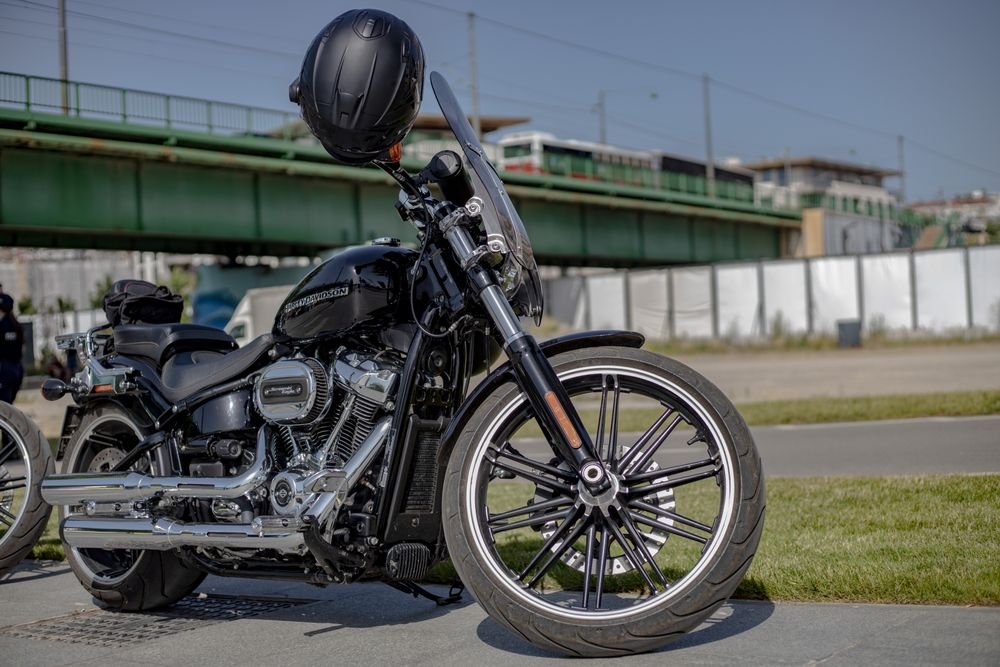
If you’ve been on YouTube lately, you’ve probably seen the headlines: “Harley-Davidson Won’t Survive 2026!” or “The Party Is Over.” It sounds dramatic. And some of it is. But there’s a real difference between a company that’s struggling and one that’s shutting down. Harley-Davidson is clearly the former. Whether it becomes the latter is a different question entirely.
Here’s a clear look at what the numbers actually show, what the dealership closures mean, why sales are falling, and what realistic outcomes look like over the next few years.
Harley-Davidson’s Financial Condition Right Now
The financials are not good. In Q4 2025, Harley-Davidson posted a net loss of approximately $279 million, with revenue down 28% compared to the same quarter the prior year. For the full year 2025, total revenue came in around $4.47 billion — down roughly 14% from the year before.
Global motorcycle shipments fell 16% in 2025, landing at about 124,477 units. Global retail sales dropped 12%, with North American sales down 13%. These are significant declines across every major metric.
That said, Harley-Davidson is still a multi-billion dollar company with active production, a global dealer network, and ongoing operations. It is losing money and shrinking — but it is not closing.
For 2026, the company projects shipments in the range of 130,000 to 135,000 units and expects a small loss. Management has described 2026 as a “transition year,” not a final one. That framing matters when you’re trying to separate real risk from clickbait.
The Difference Between Financial Distress and Going Out of Business
This is where a lot of the confusion comes from. Losses, layoffs, and production cuts are real. But they don’t automatically mean a company is shutting down.
As of early 2026, there is no bankruptcy filing, no announced wind-down plan, and no confirmed acquisition deal. Harley has confirmed a reduction in force — layoffs across its global workforce — but Powersports Business framed this as part of an effort to “stabilize the business,” not close it.
There’s an important legal distinction here. Financial distress, restructuring, bankruptcy, and liquidation are four different things. Harley is currently in restructuring territory. Companies can post losses for several years, cut headcount, and shrink their operations while still continuing to exist. Large retail chains have closed hundreds of stores, reduced staff dramatically, and narrowed their product lines — and many kept operating in a leaner form.
The YouTube videos predicting Harley “won’t survive 2026” are opinion. Some of them pull valid data from real filings, but the conclusions they draw go well beyond what those filings actually say. When you read or watch something predicting a specific collapse date, look for the source. If it’s not an SEC filing, an official earnings call, or a credible financial outlet like Reuters, treat it as speculation.
Why Dealerships Are Closing Across the U.S.
Dealer closures are real and widespread. Estimates put the number of U.S. Harley-Davidson dealerships at around 650 as of early 2026. Some projections — drawn from commentary rather than official corporate plans — suggest as many as 200 more could close by the end of 2026. That would represent a dramatic contraction in the retail network.
Closures have been documented across California, Florida, Texas, Illinois, and other states. Dealers themselves point to a few key pressure points: declining unit sales, excess inventory carrying costs, and high floor-plan interest rates.
Here’s how that plays out in practice. A dealer who was carrying 150 bikes in 2023 might now have 90. But the cost of floor-plan financing — the interest paid on inventory sitting in the showroom — hasn’t dropped proportionally. If bikes aren’t selling fast enough to offset those carrying costs, the math stops working and the dealer closes.
Global dealer inventory dropped from roughly 68,000 to about 49,000 units over the course of about a year. That’s a 17–22% reduction, depending on the period measured. Harley has been deliberately pulling back on how much inventory it pushes through dealers, which is the right strategic move — but it came after years of over-stuffing showrooms, and some dealers are paying the price for that now.
The critical point: a closed dealership means fewer local service options for riders. It does not mean Harley has stopped building motorcycles. These are two separate things that often get conflated.
The Pricing and Demographics Problem
Beyond the economic cycle, Harley faces structural demand issues that won’t fix themselves when interest rates drop.
Core touring and cruiser models carry MSRPs around $30,000. That price point locks out a large portion of younger and middle-income buyers who might otherwise be interested in the brand. Younger riders tend to gravitate toward lighter bikes, different styles, or more affordable options from other manufacturers — and this is a preference shift, not just a budget issue.
Harley’s customer base skews older. The brand has decades of loyalty among riders in their 50s and 60s, but it has not successfully converted younger riders at scale. That’s a slow-moving problem that gets worse over time. As the core demographic ages out of active riding, Harley needs new customers to replace them — and the current product lineup and price structure make that difficult.
The CEO has made public comments about making Harley “more accessible” and reducing costs to bring prices down without sacrificing quality. Whether that materializes into actual product changes remains to be seen. Analysts, including those cited by Morningstar, have noted there’s little evidence of near-term recovery in motorcycle demand — not just for Harley, but across the segment.
This Isn’t Only a Harley Problem
It’s worth noting that Harley-Davidson is not uniquely mismanaged in a thriving industry. Indian Motorcycle — its main American competitor — has also reported serious challenges, layoffs, and a cautious 2026 outlook. The broader powersports market is pulling back as consumers cut high-ticket discretionary purchases.
Add in tightening emissions regulations that require costly redesigns for traditional V-Twin engines, and you have an industry dealing with simultaneous pressure from multiple directions. Attributing Harley’s problems solely to bad decisions inside the company ignores a lot of real context.
What This Means If You Own or Are Considering Buying a Harley
If you’re a current owner, the practical concern is service and parts availability as the dealer network contracts. Fewer dealers means longer drives for warranty work or scheduled maintenance. Independent shops can fill some of that gap, but it’s worth knowing which ones are near you.
On warranties: unless Harley formally liquidates, your warranty remains enforceable. In most restructuring scenarios — and in acquisitions — service obligations and parts supply continue, even if through fewer locations.
If you’re considering buying, the uncertainty is real but not necessarily a dealbreaker. For coverage of business situations like this one, Alpha Business Daily tracks company financial health and industry trends that can help you make more informed decisions.
A buyer thinking about a $30,000 touring bike should factor in the possibility of reduced dealer support in their area. That’s a legitimate consideration, not a reason to panic.
What Realistic Outcomes Look Like
There are a few plausible paths forward for Harley-Davidson over the next three to five years.
- Downsized survival: The company completes its restructuring, operates as a smaller, leaner brand, focuses on its most profitable models, and stabilizes at lower revenue and unit volumes.
- Acquisition: A larger manufacturer or private equity firm acquires Harley, possibly restructuring it further or repositioning the brand. The name and products likely survive in some form.
- Multi-year turnaround: New leadership successfully makes the brand more accessible, attracts younger buyers, and returns to modest growth over several years. This is the most optimistic scenario and the hardest to execute.
- Continued decline: Structural issues — pricing, demographics, competition — prove too difficult to fix, and the company continues shrinking. This doesn’t necessarily end in shutdown, but it would mean fewer models, fewer dealers, and a much smaller footprint.
None of the credible sources point to a clean shutdown in 2026. The sensational predictions you see online are based on real data, but they make conclusions that the data doesn’t actually support.
The Bottom Line
Harley-Davidson is in genuine trouble. Revenue is down, losses are real, dealers are closing, and the customer base is aging. None of that is spin or exaggeration.
But “in trouble” is not the same as “going out of business.” The company is actively restructuring, cutting costs, and trying to reposition — not filing for bankruptcy or announcing a shutdown. The difference matters, especially if you own a Harley, work at a dealership, or are thinking about buying one.
Watch the official earnings reports and credible financial coverage. Ignore the videos that assign a specific death date to a company that is still producing and selling motorcycles. The real story is complicated enough without the added drama.
Read Also:
